
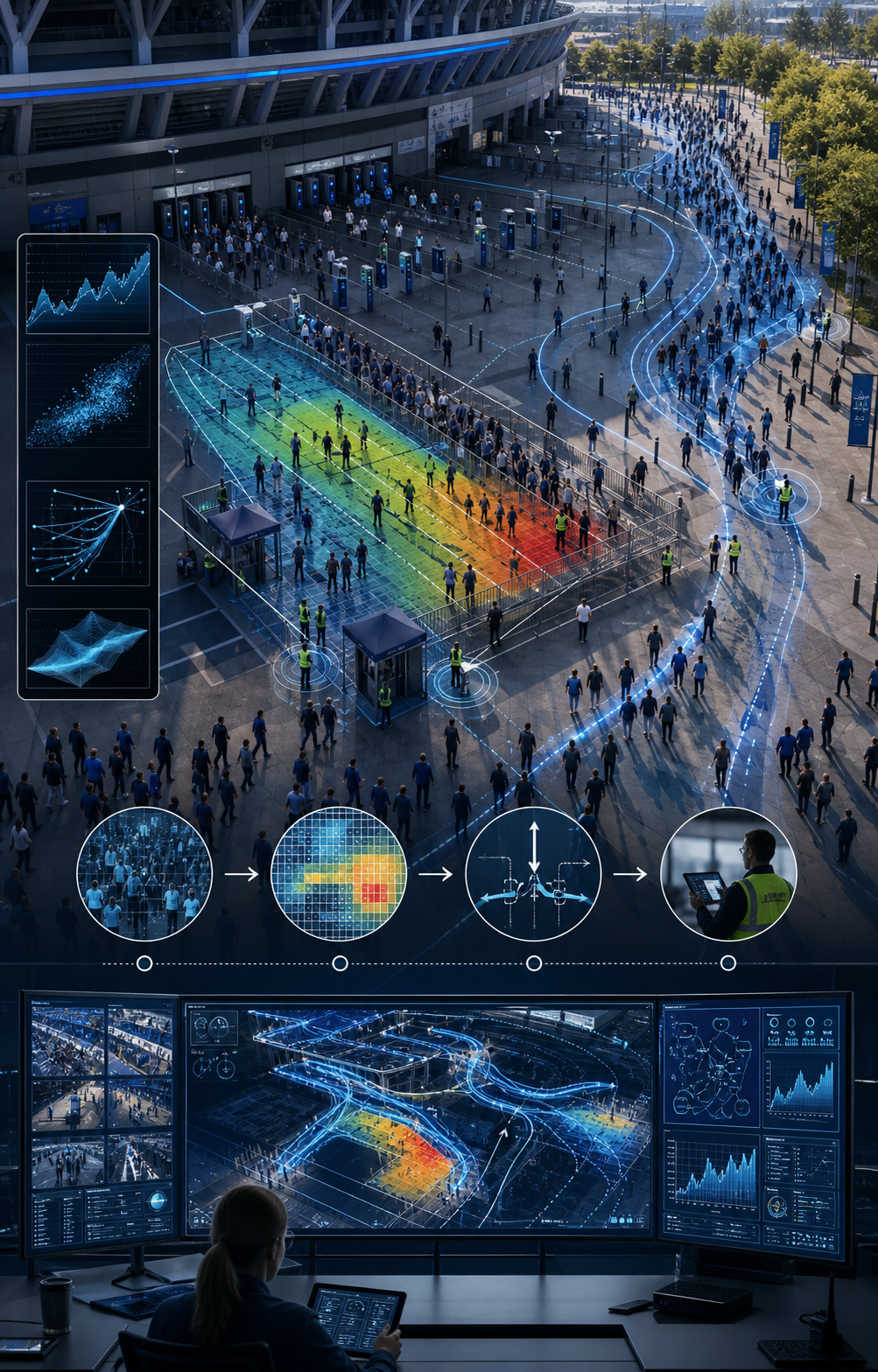
Meet your instructor
✧
Meet your instructor ✧
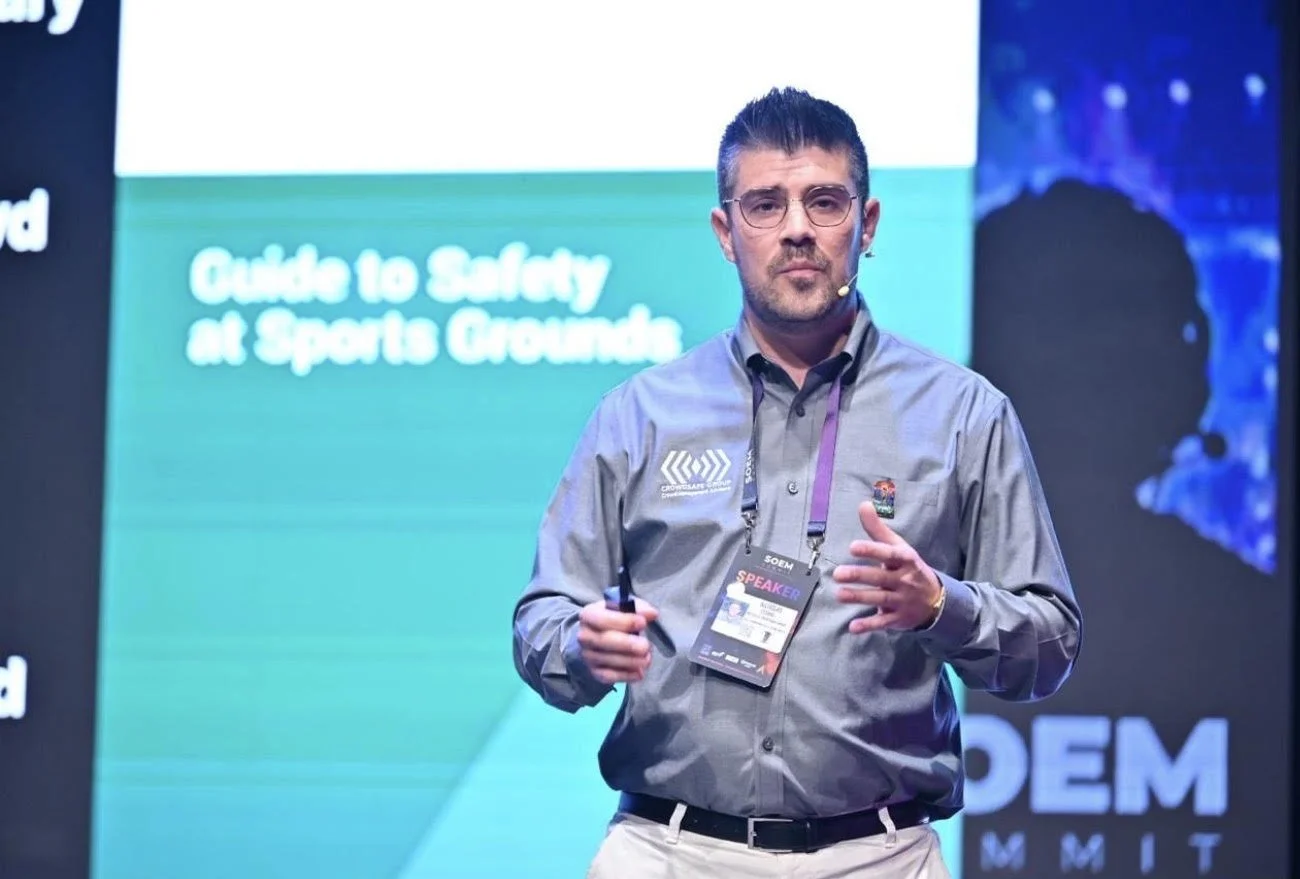
NICHOLAS CUSANO
Crowd Safety & Crowd Management Specialist
Nicholas Cusano connects crowd science with practical venue and event operations. Drawing on major-event crowd modelling, access-management and incident-command experience, he teaches front-line staff what to observe, how to work within their authority and when to communicate changing conditions to supervisors and control teams.
CrowdSafe Group · Online staff training
Practical crowd safety for event-day decisions.
Trained Crowd Staff Member (TCSM) gives front-line event staff and emerging supervisors a shared foundation for recognizing risk, communicating clearly and supporting safe movement. It is suited to stewarding, guest services, security support and venue operations.
What you will be able to do
- Recognize changing crowd conditions and communicate specific, factual concerns.
- Choose an action that fits your assigned role, authority and reporting line.
- Support orderly ingress, circulation and egress while protecting accessible routes.
- Use calm communication and respectful assistance when guests need support.
- Follow venue instructions during incidents, severe weather and emergency movement.
How the course works
Work through seven self-paced modules with lessons and knowledge checks. Complete the separate 15-question learning review and use its explanations to revisit topics before the final assessment.
The lesson list below shows the content in course order. Complete every lesson before requesting final-assessment access.
What each module teaches
01 · Know your role
Prepare for your post, understand the decision chain and limits of authority, and report through the correct supervisor or control team. Use Observe → Assess → Act → Report to organize your response.
02 · Recognize risk
Identify environmental, infrastructure, structural, medical and security concerns along the guest journey. Recognize changing conditions and make objective reports based on behavior and context.
03 · Communicate calmly
Give clear directions, maintain respectful distance, reduce conflict within your role and request timely support when a situation exceeds your authority.
04 · Provide accessible service
Ask before assisting, provide dignified wayfinding, understand service-animal considerations and protect accessible routes and refuge arrangements.
05 · Understand crowds and entry
Recognize ingress, circulation and egress conditions. Read queue growth, merging, restricted movement, increasing density and local pressure; support screening under venue procedures.
06 · Respond to incidents
Recognize physical hazards, medical concerns, fire and smoke, suspicious items and active threats. Protect responder access, preserve your own safety and follow the venue emergency action plan.
07 · Support safe movement
Distinguish directed movement, sheltering and evacuation options. Protect routes, assist guests, maintain accountability and follow weather, lightning and all-clear instructions.
Testing parameters
Prepare, verify and complete the final assessment.
- Final assessment
- 30 questions
- Passing standard
- 80% · 24 correct
- Attempt allowance
- 2 per 30 days
- After an unsuccessful attempt
- 24-hour review
What is assessed
The controlled final uses 30 randomized, scenario-based multiple-choice questions. It tests how you apply the course to staff decisions: observing risk, choosing an appropriate response, communicating concerns and staying within your authority.
The 15-question practice review supports learning and provides explanations. It is separate from the scored final assessment.
Timing and retakes
The final is timed. Review the time allowance and assessment policy displayed in the secure assessment system before you begin; the timer starts when you select Begin assessment.
Two attempts are allowed in a rolling 30-day period. After an unsuccessful attempt, a 24-hour review period applies. Additional attempts require a documented administrator exception.
How to access the assessment
- Complete all course lessons and submit the course-completion form in the final lesson.
- Use the name you want on your certificate and the email associated with your Squarespace course account. Submit your own completion attestation.
- Open the one-time verification link sent by email, verify your email and confirm your identity and the assessment policy.
- Begin when you are ready to complete the timed assessment. A personalized certificate is generated and emailed after a passing result.
Completion is based on the controlled assessment result. Marking lessons complete or purchasing access does not by itself issue a certificate.
Connect the learning to your venue.
The course provides a staff-level foundation. Your venue induction, emergency action plan, supervision and role-specific training remain essential to applying it at work.
For organizations, CrowdSafe can build a custom TCSM program around venue procedures, risk locations and assigned staff responsibilities.
Discuss a custom staff programDesigned to support the crowd management training requirements of NFPA 101®, Life Safety Code®.
Trained Crowd Staff Member (TCSM)
Build a practical, role-aware foundation for front-line event work. Across seven modules, learners use Observe → Assess → Act → Report; clarify authority and reporting lines; recognize environmental, infrastructure, structural, medical and security risks; support screening, fire, weather and threat controls; read crowd flow, density and demeanor; assist with movement, shelter and evacuation; de-escalate difficult interactions; and provide accessible, dignity-centered service. The course ends with a 30-question scenario-based assessment. A score of 80% (24 of 30) is required to pass.
-
Module 1 · Know Your Role
-
Module 2 · Recognize Risk
-
Module 2.1: Risk Foundations & the Guest Journey
Understand how event risk differs from ordinary operations and learn a practical method for recognizing changing hazards.
-
Module 2.2: Event Risk Categories & Warning Signs
Recognize environmental, infrastructure, structural, medical and security risks across the event environment.
-
Module 2.3: Security Awareness & Objective Reporting
Recognize behavior-based security indicators, preserve distance and report facts without profiling.
-
Module 2 Knowledge Check
-
-
Module 3 · Communication
-
Module 4 · Accessible Service
-
Module 5 · Crowds & Entry
-
Module 5.1: People, Movement & Crowd Flow
Build a practical foundation in crowd behavior, planning, observation, communication and early intervention.
-
Module 5.2: Queue Growth & Layout
Read crowd flow, route choice, merging and egress conditions so emerging movement problems can be reported early.
-
Module 5.3: Venue Policy, Procedures & Communication
Apply venue procedures, work within assigned authority and communicate changing conditions through the correct reporting line.
-
Module 5.4: Screening Equipment & Role Boundaries
Understand common screening equipment, support organized entry and stay within the boundaries of the assigned role.
-
Module 5.5: Crowd Density & Local Pressure
Recognize increasing density, restricted movement and behavior changes before conditions become unsafe.
-
Module 5 Knowledge Check
-
-
Module 6 · Incident Response
-
Module 6.1: Physical Hazards, Medical Response & Staff Protection
Recognize emergency threats, protect responder access and follow the venue emergency action plan and command direction.
-
Module 6.2: Structure Fire Awareness
Recognize fire and smoke cues, protect egress, report accurately and follow the venue emergency action plan.
-
Module 6.3: Fire Classes & Extinguisher Awareness
Recognize fire classes and extinguisher limitations while prioritizing alarm, evacuation and trained response.
-
Module 6 Fire Safety Knowledge Check
-
Module 6.4: Bomb Threats & Suspicious Items
Recognize suspicious items, preserve distance, isolate the area and make an accurate report without touching the item.
-
Module 6.5: Active Threat Response
Recognize an active threat, prioritize escape or protection and follow command and public-safety direction.
-
Module 6.6: Lawful Protest, Access & Escalation
Support lawful activity while protecting access, preserving neutral conduct and escalating behavior-based concerns.
-
Module 6 Knowledge Check: Incident Response
-
-
Module 7 · Safe Movement
-
Module 7.1: Movement Options, Authority & Routes
Support deliberate crowd movement by protecting routes, reducing conflict and communicating clear directions.
-
Module 7.2: Accessible Routes & Assistance
Support accessible evacuation, protect areas of refuge and preserve responder access under the venue plan.
-
Module 7.3: Guidance & Accountability
Support calm evacuation and emergency movement by protecting routes, assisting guests and following command direction.
-
Module 7.4: Weather Alerts & Lightning Shelter
Follow hazard-specific weather instructions, use suitable lightning shelter and wait for the designated all-clear.
-
-
Practice & Certification
-
Learning Review — Practice Before the Final Assessment
Apply all seven modules through 15 practice questions, then review the explanations before the final certification assessment.
-
Final Certification Assessment · 80% Required
Complete the 30-question scenario-based assessment. A score of 80%—24 correct answers—is required to pass.
-
What does the Trained Crowd Staff Member course cover?
-
Understand role boundaries, the operational loop, behavior-based security awareness, objective reporting, event-risk categories, screening and proportionate escalation.
-
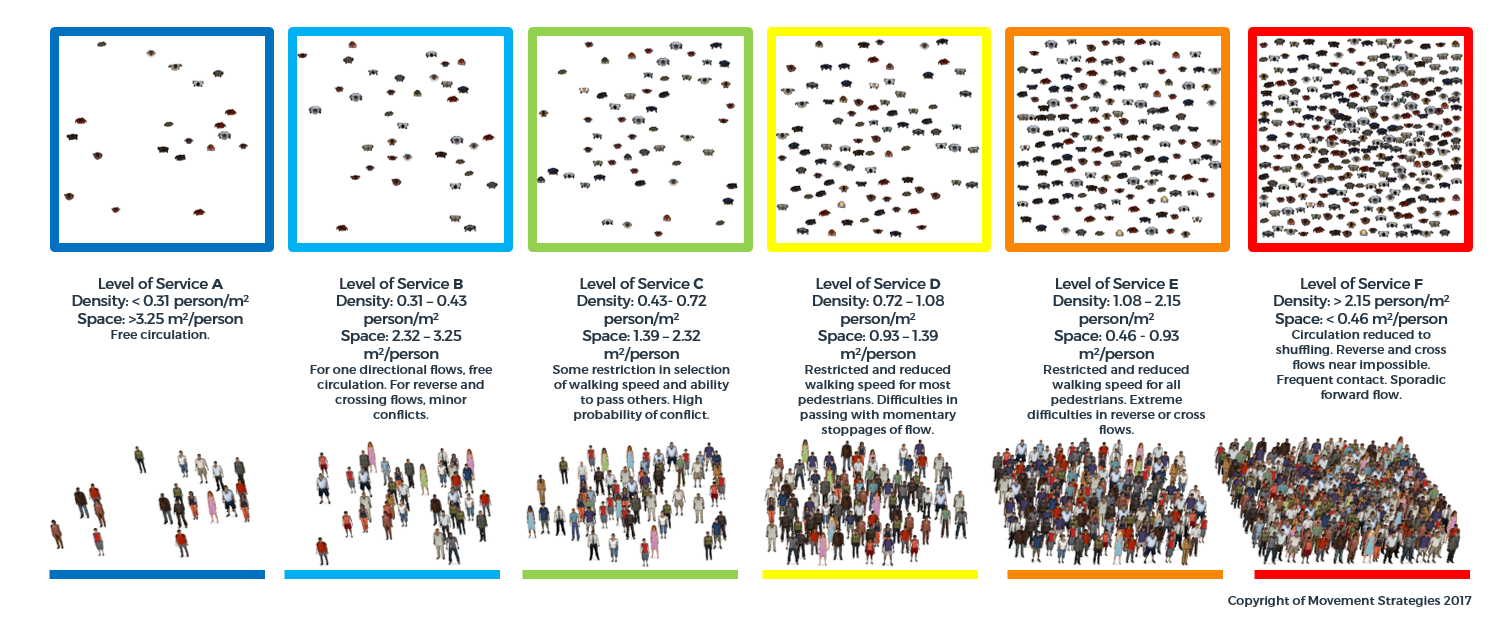
Read crowd flow, density, demeanor and pressure indicators; identify pinch points; and support limited, directed, shelter and general evacuation decisions under command.
-
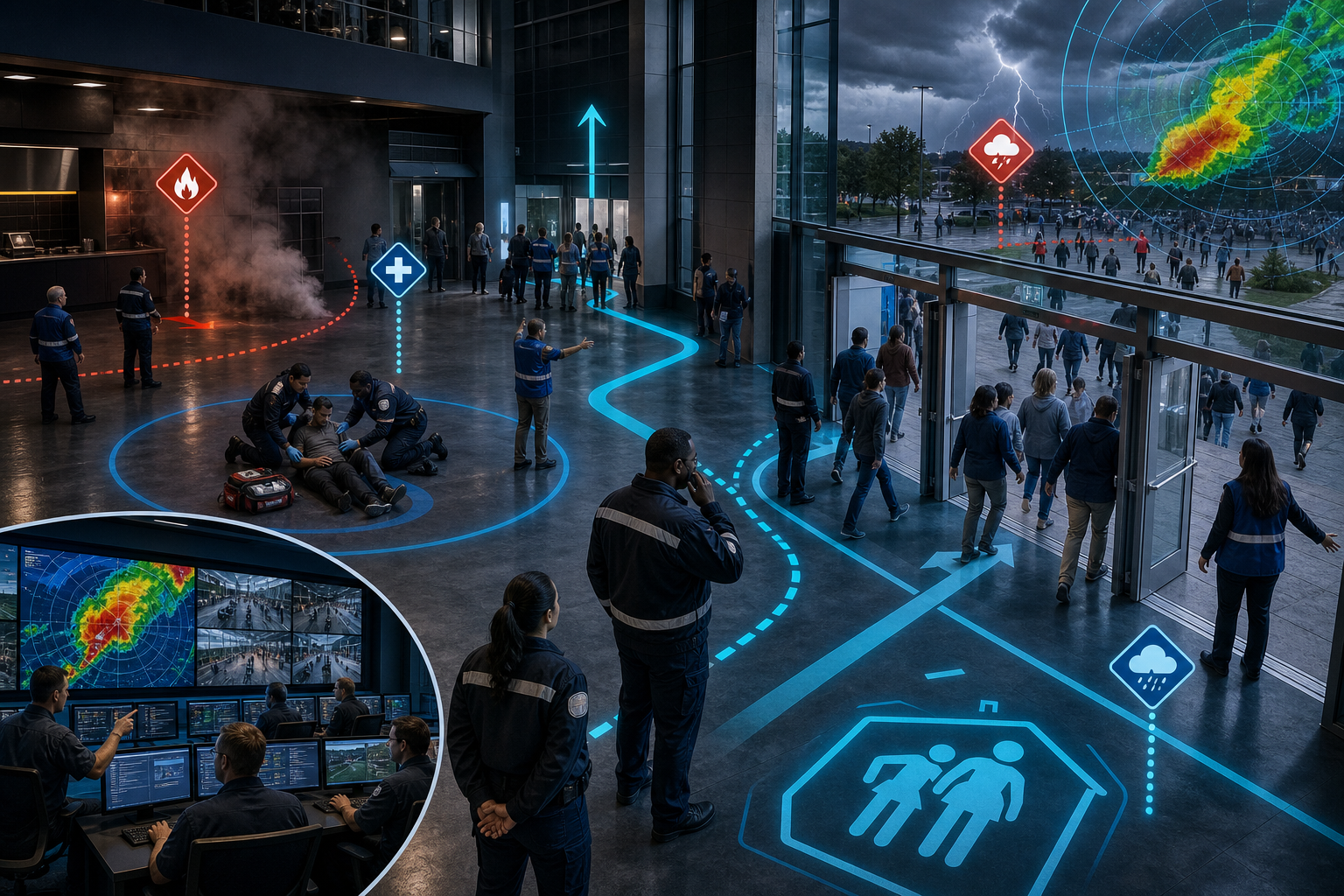
Recognize fire, smoke, weather, medical and active-threat cues; protect routes and exits; follow emergency plans; and report promptly using approved procedures.
-
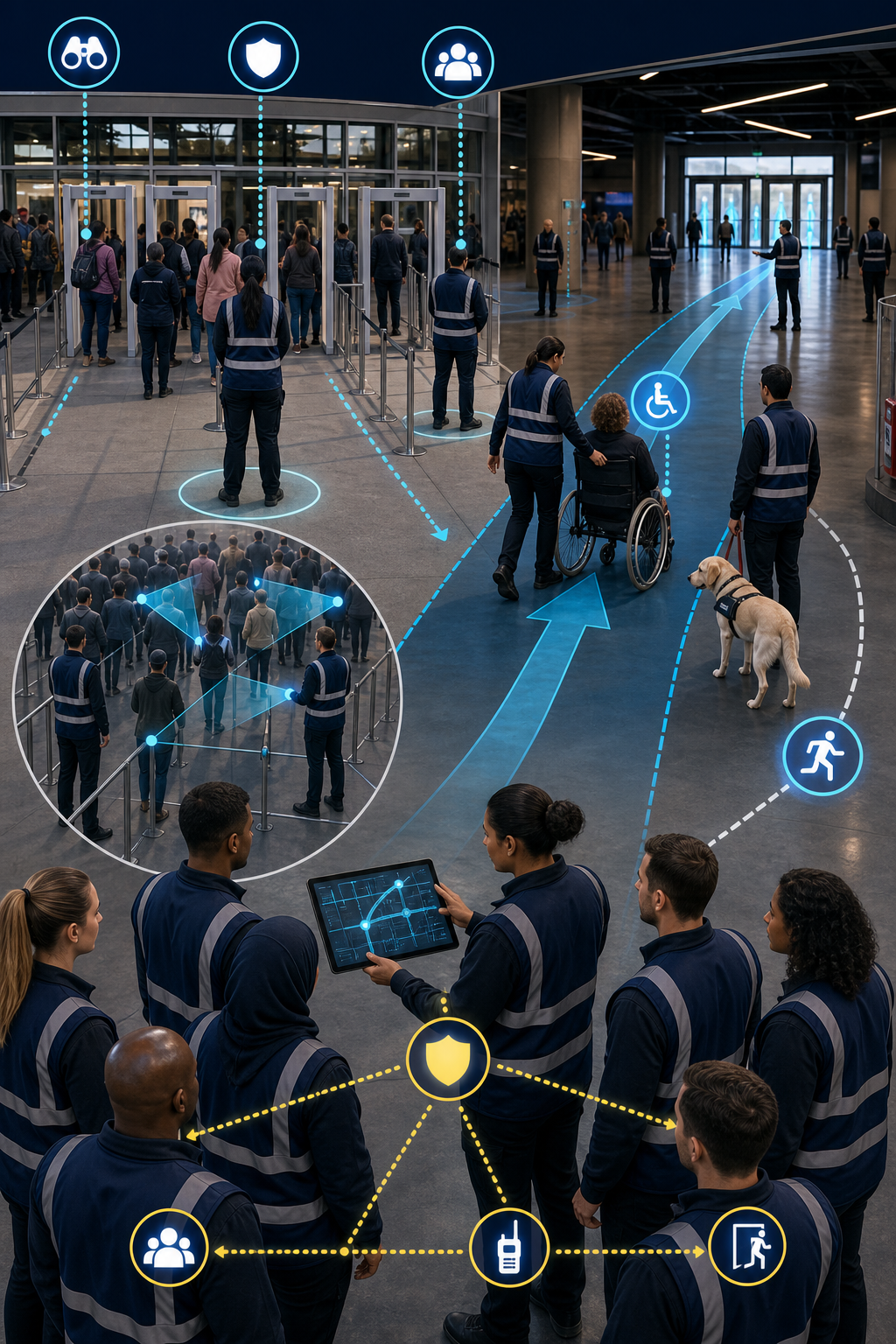
Use safety, space, respectful language and role-appropriate limits to reduce tension; support disabled guests, service animals and accessible emergency egress with dignity.
Course FAQ
-
The course is designed for event staff and emerging supervisors working across stewarding, guest services, security support, venue operations and related crowd-facing roles. Organizations should still confirm role-specific and local training requirements.
-
Learners receive access to the published course modules and knowledge checks. A certificate of completion is issued when the stated completion requirements are met. Access period, renewal and continuing-development terms are shown with the current offering.
-
The standard TCSM course provides a general foundation for event staff. We also offer custom TCSM training developed with you around your venue requirements, operating procedures and staff needs. Employers retain responsibility for staff induction, venue and event briefings, role-specific procedures and supervision, along with any qualifications required by applicable laws, contracts or local policies.